
Collective Learning for Gender Justice
OCTEVAW is pleased to collaborate with YWCA Canada on a national webinar series that brings together community members, practitioners, advocates, and organizers to deepen learning, dialogue, and action to prevent gender-based violence (GBV).
This webinar series creates accessible, virtual spaces to explore urgent and emerging issues within the GBV sector, grounded in feminist, intersectional, and community-led approaches. Each session centres lived experience, critical analysis, and practical insight, with a strong focus on equity, justice, and systemic change.
Who the Webinars Are For
These webinars are open to:
GBV sector workers and service providers
Community organizers and advocates
Policy-makers and researchers
Students and community members
Anyone interested in advancing gender justice and violence prevention
What to Expect
Participants can expect:
Community-grounded analysis rooted in lived experience
Intersectional feminist and human rights frameworks
Practical insights for prevention, advocacy, and systems change
Interactive elements that encourage reflection and dialogue
Accessible formats, including interpretation from English to French
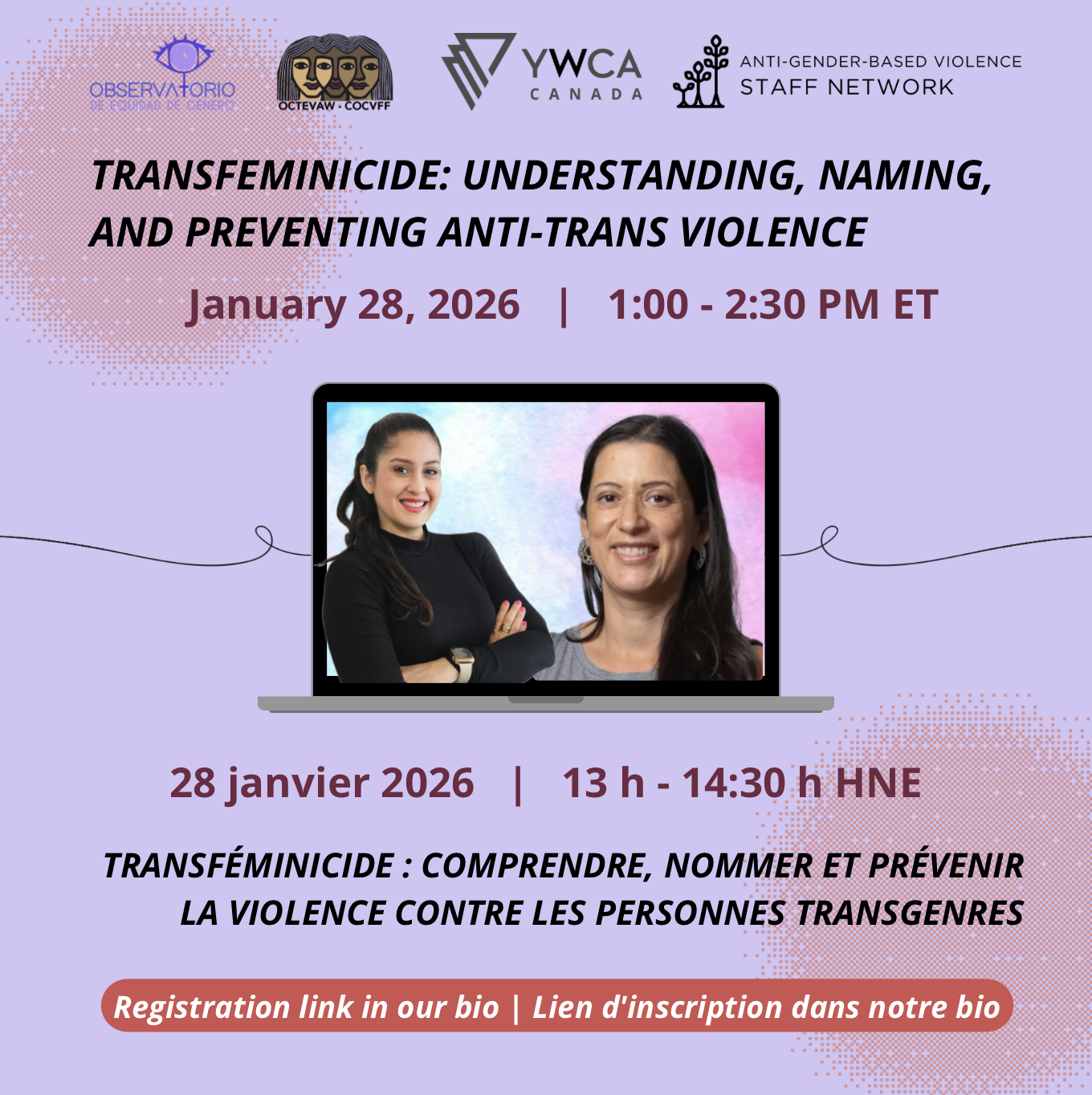
Transfeminicide: Understanding, Naming & Preventing Anti-Trans Violence
This webinar examines transfeminicide as a specific and urgent manifestation of gender-based violence rooted in transphobia, misogyny, and structural inequality.
Drawing on Latin American feminist and human rights frameworks, speakers Stephanie Figueroa and Debora Upegui-Hernández explore why naming transfeminicide matters, the role of the State and institutions in prevention and accountability, and how collective responsibility is essential to confronting anti-trans violence and advancing justice.
Learn more about their work at the Observatorio de Equidad de Género.
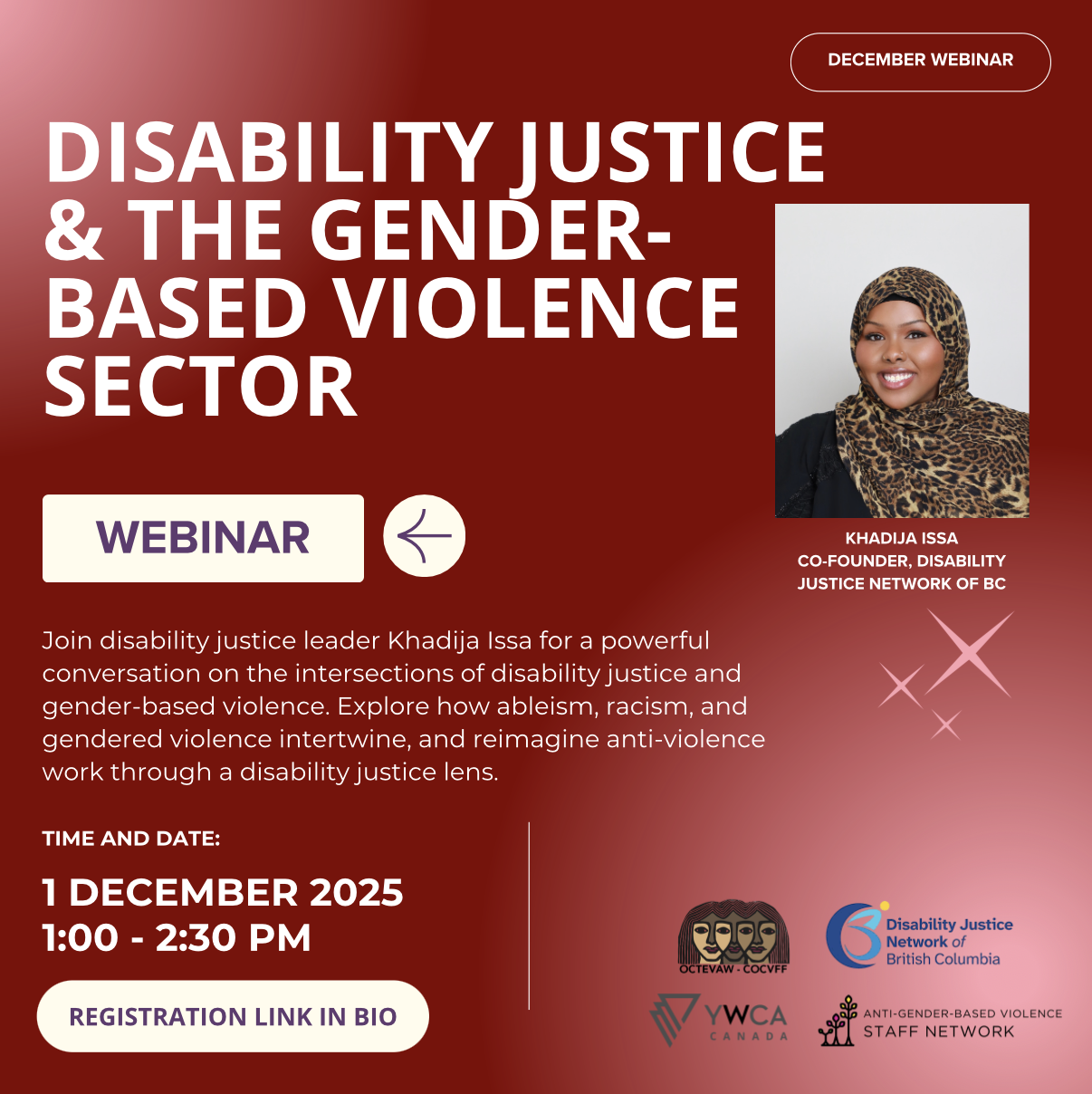
Disability Justice & Gender-Based Violence
This webinar explores the intersections between disability justice and gender-based violence, examining how ableism, racism, and gendered violence compound harm for disabled people — particularly those who are Black, Indigenous, racialized, and newcomers.
Led by disability justice leader Khadija Issa, the session invites participants to reimagine anti-violence work through a disability justice lens, centring access, interdependence, and community power. The conversation highlights how systems often exclude disabled survivors, and what it means to build GBV responses that truly leave no one behind.