Safer Together Mayoral Candidate Forum
Mayoral Candidates’ Forum on gender justice and community safety
As part of Safer Together, OCTEVAW and the City for All Women Initiative (CAWI) hosted a Mayoral Candidates’ Forum on September 25, 2026, ahead of Ottawa’s 2026 municipal election.
While all 14 candidates were invited to the Forum, six attended: Zed Chebib, Alex Lawson, Jeff Leiper, Neil Saravanamuttoo, Ali Shayvard, and Mark Sutcliffe.
The Forum recording can be found here.
The Forum created space for residents, survivors, frontline workers, service providers, and community organizations to bring their concerns related to gender justice and community safety directly to candidates.
The approach: Question Co-Development
Rather than developing questions internally, we invited community members to help shape the conversation. A public community session on September 18 brought participants together to co-develop questions across five themes:
Safe, affordable and accessible housing as prevention
Economic security, equity and pathways to opportunity
Inclusive and caring cities
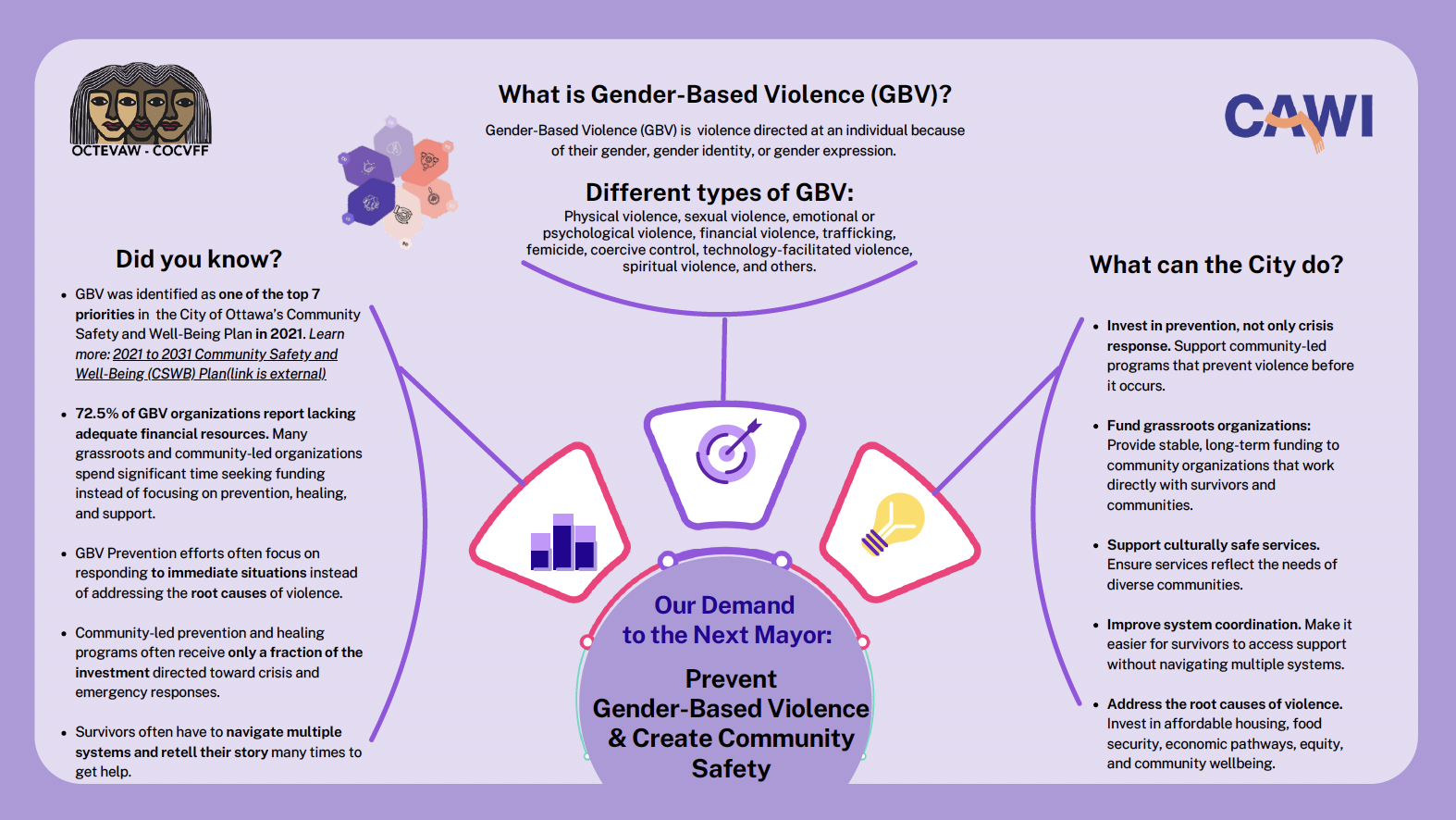
Preventing gender-based violence and creating community safety
Culturally Responsive Services
Participants then used dotmocracy to identify the questions they considered most important. Additional questions were collected through public registration for the forum. The final questions therefore reflect both in-person community deliberation and broader public submissions.
The forum gave mayoral candidates an opportunity to respond directly to community priorities and to explain what they would do, within the powers of the mayor and City, to advance gender justice and create safer communities.
Card deck
The Safer Together card deck is another tool developed through the campaign. Rather than being simply an educational resource, the deck is designed to help people have conversations about what creates safety and what a safer Ottawa could look like.
The cards can be used to prompt reflection and discussion around the campaign's core themes—such as housing, economic security, public space, community care, prevention, and collective responsibility—and to help people connect everyday experiences to broader municipal systems and policy choices.
This makes the card deck particularly useful for community conversations, workshops, events, and civic engagement. It creates a low-barrier way for people to identify what safety means to them, consider what needs to change, and think collectively about the role of the City in creating those conditions.